
Feminist leadership

It's not about taking a place, it's about changing the game.
At a time when crises are multiplying—from climate to democracy—more and more voices are saying the same thing: the old models of power no longer work. But there is an alternative flourishing from the shadows, from the peripheries, from communities: feminist leadership. It is not just a question of gender; it is a radical proposal to redefine what it means to lead, decide, and transform.
In this article, we explore why this leadership is not only necessary but urgent... and how society can stop hindering it and start truly empowering it.
Keep reading: because the future is not built with more hierarchies, but with more justice, empathy, and collective courage.

In recent years, we have celebrated important milestones: more women in parliaments, on boards of directors, on international stages. But while we applaud these advances, one question remains: are we truly transforming power... or just decorating the same structures with new faces?
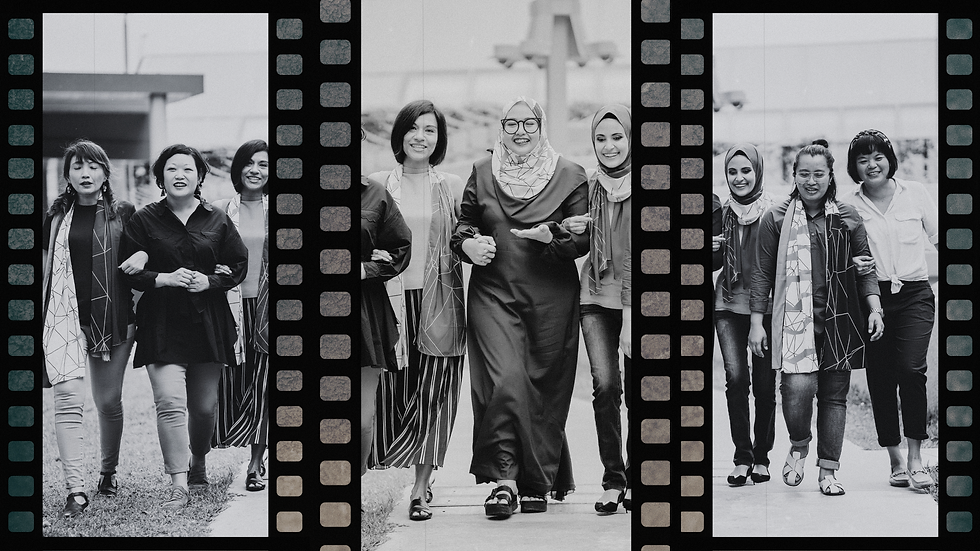
Feminist leadership is not simply “women in positions of power.” It is a radically different way of exercising authority: horizontal, inclusive, sustainable, and life-centered. It does not seek to dominate, but to care; not to impose, but to build collectively. And although it may sound utopian, it is already happening—in rural communities, in conflict zones, in urban movements—with compelling results.
Data that cannot be ignored
According to UN Women (2024), women represent only 26.5% of legislators worldwide. In national governments, only 13 out of 193 countries have female heads of state. But where women have led, the impacts are clear: a report by the International Peace Institute shows that peace agreements that include women are 35% more likely to last more than 15 years.
Beyond formal politics, humanitarian organizations confirm what many already knew: women are the first to respond to crises. The International Red Cross reveals that less than 0.5% of global humanitarian funding goes directly to organizations led by local women, even though they are on the front lines of action—from Ukraine to Sudan, from Colombia to Bangladesh.
Leadership based on care
Thinkers such as bell hooks, Audre Lorde, and Rita Laura Segato have insisted that feminism is not a struggle for power as we know it, but rather a struggle to redefine it. Feminist leadership understands that caring is not secondary: it is political. That listening is not passivity: it is strategy. That networking is not informality: it is organized resistance.
In Latin America, Indigenous Women of the Amazon defend their territories not with weapons, but with ancestral wisdom and community governance. In Africa, collectives such as FEMNET (Feminist Africa Network) demand policies that link climate justice and reproductive rights. In Asia, activists such as Khushi Kabir in Bangladesh lead movements that combine solidarity economy and bodily autonomy.
What does society need to empower this leadership?
It is not enough to open doors if the rules of the game remain the same. For feminist leadership to flourish, we need profound changes:
Direct funding: Global donors must allocate resources without intermediaries to organizations led by women, especially Black, Indigenous, migrant, and LGBTQ+ women.
Transformative education: Schools and universities must teach collaborative, not competitive, leadership.
Recognition of care work: According to the ILO, if valued economically, it would represent up to 39% of GDP in some countries. It is time for it to be counted, paid, and redistributed.
Real, not symbolic, parity: Quotas with teeth, not window dressing. As in Rwanda, where women hold more than 60% of parliamentary seats thanks to mandatory laws.

Building another world is possible—and it is already underway
Feminist leadership does not wait for permission. It is already creating alternatives in the midst of crisis. It is not about being “as good as men,” but about demonstrating that there are other ways of leading: more humane, more just, more alive.
As poet Audre Lorde wrote: “We cannot dismantle oppressive structures using the same tools that built them.” Feminist leadership does not bring new tools: it brings new hands, new hearts, and above all, a new vision.
And that vision deserves space, support... and real power.

Did you like this article? Share it, comment on it, or join the conversation. Because change doesn't start with speeches, but with collective action.
Subscribe to our blog and receive inspiring information.
Zoe Network Communications


Comments